Signage & LED Strip Lighting Factory Since 2011

Signage & LED Strip Lighting Factory Since 2011

Can neon lights harm the eyes?

Can neon lights harm the eyes

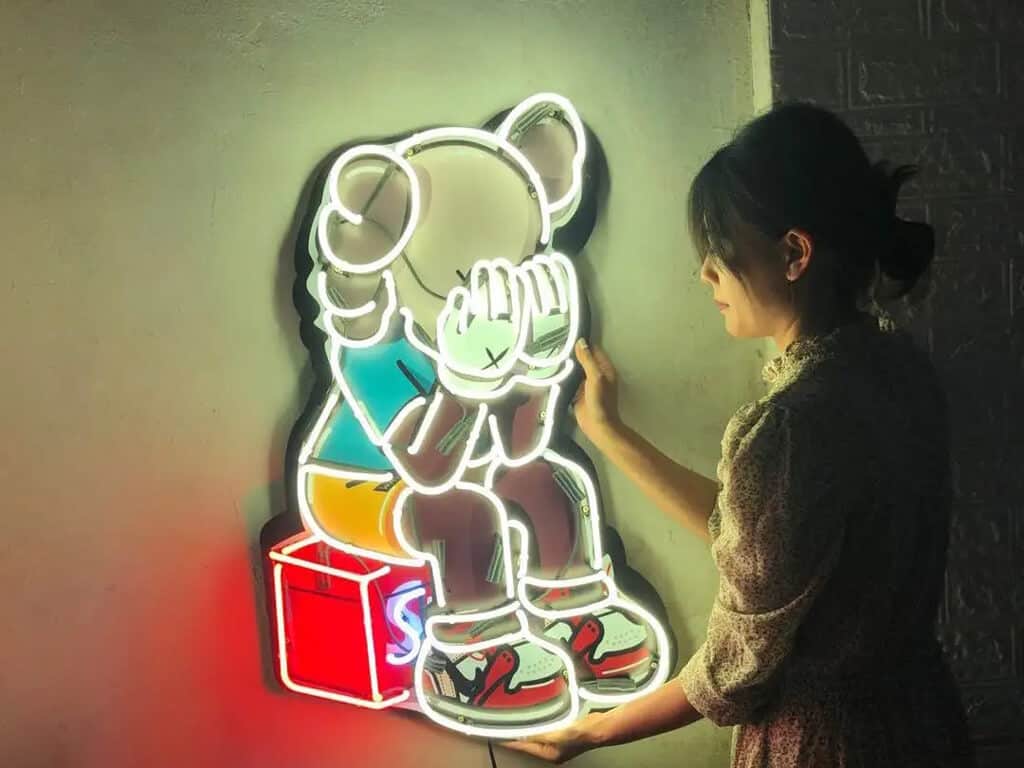
A common lighting option that offers a vintage and vibrant feel are neon lights. They are frequently employed in applications for ornamental lighting, signs, and advertising. However, some people are unsure if neon lights are harmful to their eyes. We shall examine the response to this question in this blog article.

The simple answer is that while extended exposure to intense neon lights might irritate eyes and temporarily impair vision, neon lights are typically harmless for your eyes. This is due to the fact that neon lights give off a strong, concentrated light that, especially when viewed closely or for an extended period of time, can be strenuous on the eyes.

The production of UV radiation from neon lights is one of the key safety issues. While UV radiation is emitted by neon lights, the amounts are typically thought to be very low and not damaging to the eyes. However, it may be wise to take measures, such as wearing UV-blocking glasses, for persons who are very sensitive to UV radiation or who spend a lot of time close to neon lights.

The frequency of neon light flicker is another issue. Neon lights flicker rapidly, which can make some people uncomfortable and temporarily impair their vision. Flicker-induced pain is a condition that can lead to headaches, eye strain, and nausea. Modern neon lights, on the other hand, have a higher flicker rate that is less likely to be uncomfortable.

It’s crucial to remember that possible harm from neon lights to your eyes is typically minimal and transient. The symptoms often go away after the person is no longer exposed to neon lights, and they are not thought to result in long-term damage to the eyes.

Also important to note is that LED neon lights, which are growing in popularity, do not provide the same hazards as conventional neon lights. For those who are worried about the potential harm to their eyes, LED neon lights are a safer and more comfortable option because they do not release UV radiation and have a lower flicker rate.

In conclusion, while extended exposure to intense neon lights might cause discomfort and short-term vision issues, neon lights are generally safe for your eyes. If you are very vulnerable to UV radiation or spend a lot of time under neon lights, you should take precautions. For those who are worried about the potential harm to their eyes, LED neon lights are a safer and more pleasant solution. You may appreciate the vibrant and vintage beauty of neon lights without being concerned about potential harm to your eyes by utilizing neon lights safely and taking precautions to safeguard your eyes.

Edge-Lit LED Strip Bare LEDLensPotting Compound Luminous Efficiency and Color Temperature EvaluationEdge-Lit LED Strip Bare LEDLensPotting Compound Luminous Efficiency and Color Temperature Evaluation
Edge-Lit LED Strip: Bare LED/Lens/Potting Compound Luminous Efficiency and Color Temperature Evaluation
Test Objectives 1) Document changes in luminous efficiency, color temperature, and CRI data across three distinct production stages of edge-lit LED strips: bare LED board → LED with lens → lens with potting compound. Provide data support for product development. 2) Evaluate the impact of varying power levels and strip lengths on...
Comparison Test of Color Temperature Changes in LED Strip with Drop-Coated vs. Potting-CoatedComparison Test of Color Temperature Changes in LED Strip with Drop-Coated vs. Potting-Coated
Comparison Test of Color Temperature Changes in LED Strip with Drop-Coated vs. Potting-Coated
Aging Test Objectives and Experimental Environment Description Test Objective: To evaluate color temperature shifts in LEDs after applying drip-coating or potting resin to commonly used waterproof LED strips across various color temperatures. Record test data and compare color temperature variations before and after applying waterproofing processes (drip-coating vs. potting resin) to...
Modular-LED-Linear-ModuleModular-LED-Linear-Module
Why Linear LED Modules Are the Future of Modular Commercial Lighting Systems
If you work with commercial lighting long enough, you eventually ask yourself a simple question: Why do constant-voltage LED strips always look good on paper but rarely behave well in real projects? The answer is familiar to anyone who has dealt with long-run installations: voltage drop, uneven brightness, unpredictable color shifts,...
Top Applications of LED Fish Attracting Lights: Boats, Docks, Ponds, and Offshore Projects
LED fish attracting lights use specific wavelengths—mainly green and blue—to draw plankton and small baitfish toward the light, which in turn attracts larger fish. This simple but effective biological chain reaction makes them a favorite tool among both commercial and recreational fishermen. For a detailed explanation of how fish lights...
How to Choose the Right LED Strip Light WidthHow to Choose the Right LED Strip Light Width
How to Choose the Right LED Strip Light Width?
LED strip lights come in a variety of widths, lengths, and LED chip types, making them versatile for both residential and commercial lighting applications. When it comes to lighting projects, choosing the right width for LED strip lights can be a real headache. Have you ever felt overwhelmed by the...
led-strip-lightled-strip-light
What’s max length of led strip light?
LED strip lights are very popular because they are versatile. One of their great features is the ability to cut them to any length, making them easy to customize. But what if you need to extend them over a larger distance, like tens or even hundreds of feet? This can...

Share:

Facebook
Twitter
Pinterest
LinkedIn
Subscribe
Notify of
guest
0 Comments
Oldest
Newest Most Voted
Inline Feedbacks
View all comments

Search SignliteLED Blog

Categories

To top

Get a Quote Now